Spec-Driven Development: An Analysis of AI-Assisted Coding Models

规范驱动开发:AI辅助编程模式解析
Spec-Driven Development: An Analysis of AI-Assisted Coding Models
应用程序的构建方式正在发生根本性转变。过去,编写和审查代码是开发过程中最困难的环节,而现在,核心难点已转化为如何向大型语言模型有效传达构建需求。在这种背景下,规范驱动开发已成为利用人工智能协助构建应用程序及人工智能工程师所需掌握的关键技能之一。
The way applications are built is undergoing a fundamental shift. Previously, writing and reviewing code was the most difficult part of the development process, but now the core challenge has shifted to effectively conveying build requirements to large language models. In this context, spec-driven development has become one of the critical skills needed for utilizing AI to help build applications and for AI engineers.
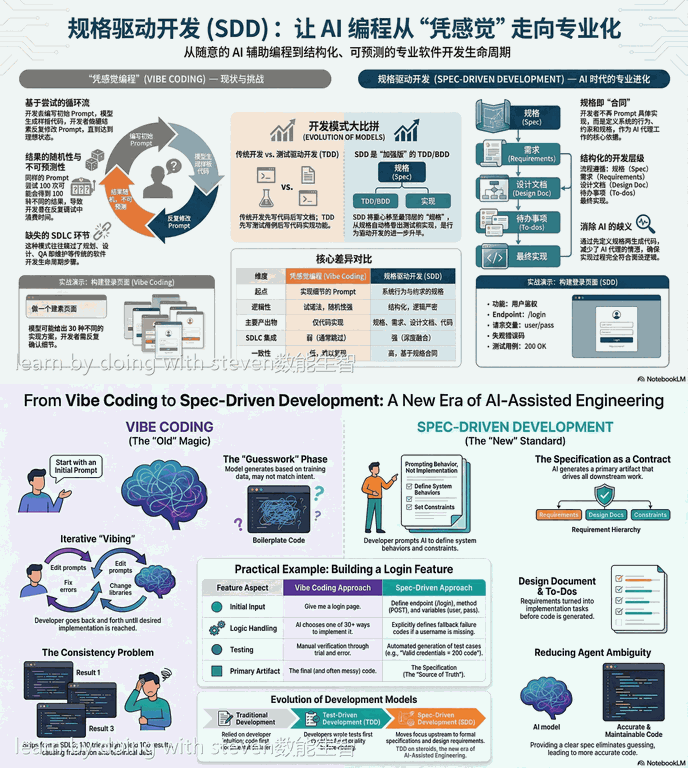
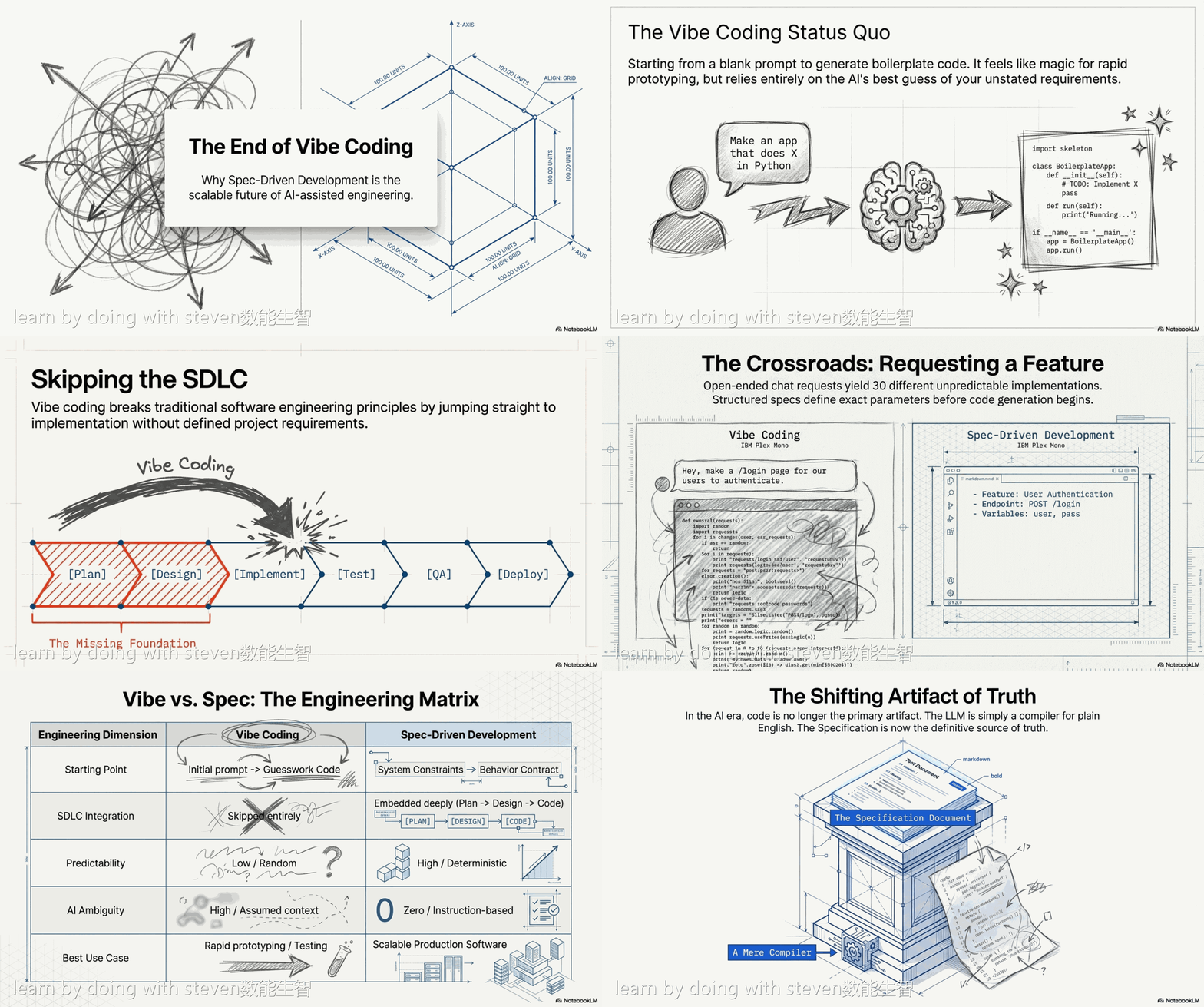
在探讨规范驱动开发之前,通常需要了解另一种被称为“氛围编程”的常见技术,这也是人们普遍认知中的人工智能辅助编程模式。在此模式下,开发者从初始提示词开始,要求人工智能模型使用特定语言生成具备特定功能的应用程序。模型基于其训练数据和对提示词的理解生成样板代码。这种方式适合进行快速测试,但由于往往无法一次性达到精确的预期实现效果,开发者需要反复修改提示词并与模型进行多轮交互,直至获得理想结果。
Before exploring spec-driven development, it is usually necessary to understand another common technique known as vibe coding, which is also the generally recognized model of AI-assisted coding. In this model, developers start with an initial prompt, asking the AI model to generate an application with specific functionality using a specific language. The model generates boilerplate code based on its training data and understanding of the prompt. This approach is suitable for rapid testing, but because it often fails to achieve the precise desired implementation at once, developers need to repeatedly edit prompts and interact with the model in multiple rounds until the ideal result is achieved.
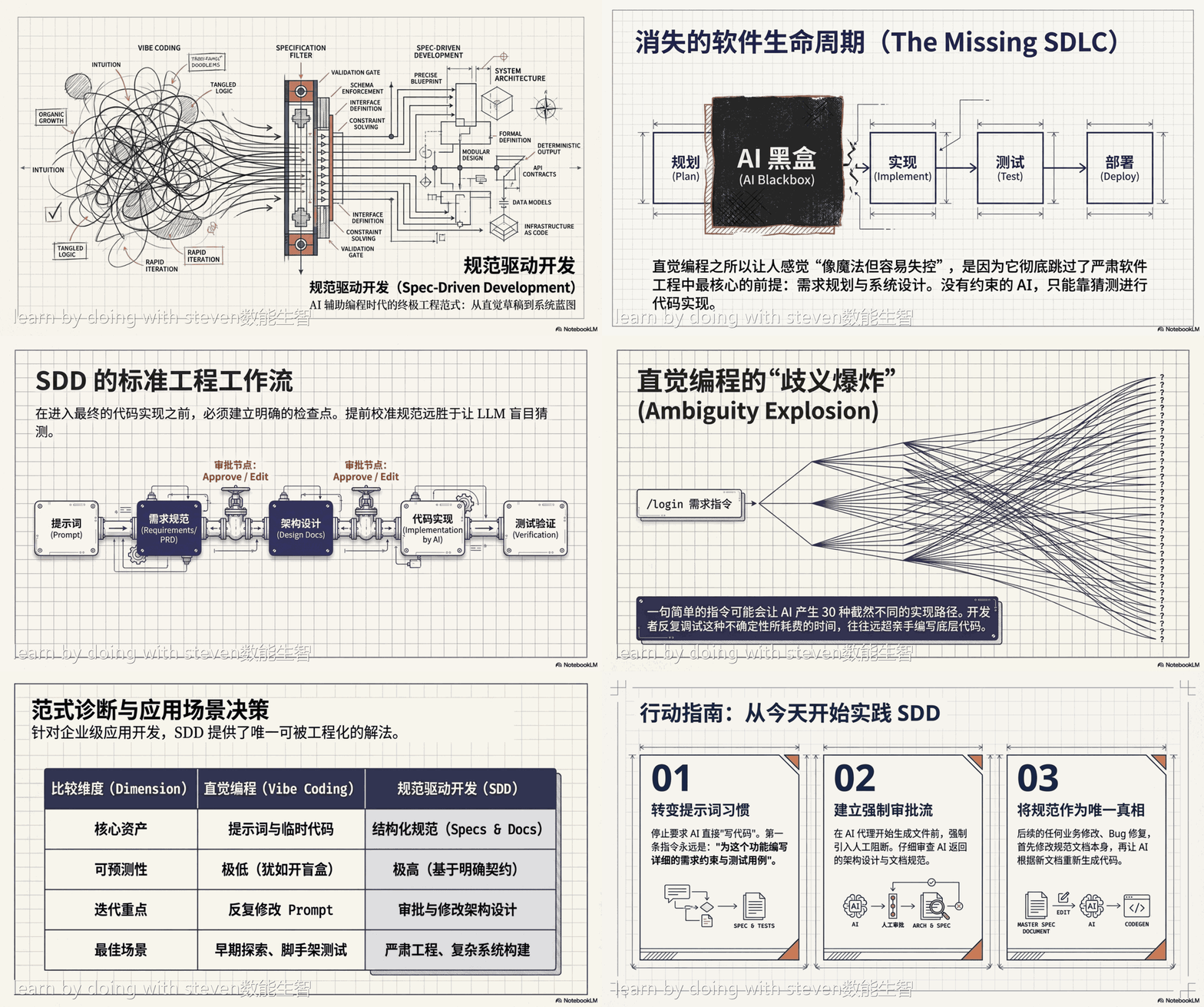
氛围编程存在一定局限性。对于同一个提示词,人工智能模型可能会做出数十种不同的决策,每次生成的实现方式都可能不同,这导致了开发过程的不确定性。此外,该模式跳过了传统的软件开发生命周期。传统开发周期通常以使用特定产品需求文档进行规划和设计为起点,随后依次进入功能实现、测试与质量保证、从开发到预发再到生产环境的部署,最后进入项目维护阶段。
Vibe coding has certain limitations. For the same prompt, an AI model might make dozens of different decisions, and the generated implementation might be different every time, which leads to uncertainty in the development process. Furthermore, this model skips the traditional software development life cycle. The traditional development cycle typically starts with planning and designing using specific product requirement documents, followed sequentially by feature implementation, testing and quality assurance, deployment from development to staging and then to production environments, and finally the project maintenance phase.
相比之下,规范驱动开发采用了一种将软件开发生命周期要素与人工智能生成软件相融合的全新路径。在此模式下,初始提示词不再要求模型进行具体实现,而是着重描述系统所需的行为和约束条件。这些规范作为一种契约,用于创建包含代码编写、测试、文档编制和验证等环节的总体需求架构。如果开发者对这些需求表示认可,便可将其转化为包含各项具体实施任务的设计文档,或者继续对项目实施细节进行修改。
In contrast, spec-driven development adopts a new approach that integrates elements of the software development life cycle with AI-generated software. In this model, the initial prompt no longer asks the model for specific implementations, but focuses on describing the required behavior and constraints of the system. These specifications act as a contract to create an overall requirements architecture that includes coding, testing, documentation, and verification. If developers approve of these requirements, they can be transformed into a design document containing specific implementation to-dos, or the project implementation details can be further edited.
从开发周期的演变来看,传统的开发方式通常基于直觉优先编写代码,随后补充文档;测试驱动开发则是从测试用例和预期功能出发,然后编写代码;而规范驱动开发则重构了这一流程。它以规范为起点,推导出设计文档需求并进入实际的开发准备,最终才由人工智能代理执行代码编写。由于人工智能模型依赖于准确的指令,拥有明确的规范比让模型猜测用户意图更为有效。
Looking at the evolution of development cycles, traditional development methods usually prioritize writing code based on intuition, followed by documentation; test-driven development starts with test cases and expected functionality, then moves to writing code; whereas spec-driven development restructures this workflow. It starts with specifications, derives design document requirements, proceeds to actual implementation readiness, and finally relies on the AI agent to execute the coding. Because AI models depend on accurate instructions, having clear specifications is more effective than having the model guess user intentions.
以构建用户登录验证功能为例,在氛围编程中,开发者仅输入需要一个登录页面的简单请求,模型可能会产生大量不确定的实现路径;而在规范驱动开发中,开发者需要在规划阶段预先定义具体细节,包括终端路径、请求类型、接受的变量名,以及用户名缺失时的失败回退代码和验证通过时的状态码等测试用例。这种方式大幅减少了人工智能编码代理面临的歧义,使规范成为驱动下游所有实施和测试工作的主要核心产物。
Taking the building of a user login authentication feature as an example, in vibe coding, the developer simply inputs a request for a login page, and the model might generate a large number of uncertain implementation paths; whereas in spec-driven development, the developer needs to pre-define specific details during the planning phase, including the endpoint path, request type, accepted variable names, as well as test cases such as the failure fallback code when a username is missing and the status code for valid credentials. This approach significantly reduces the ambiguity faced by AI coding agents, making the specification the primary core artifact that drives all downstream implementation and testing work.
ref:ibm technology
All my links: https://linktr.ee/learnbydoingwithsteven
#规范驱动开发 #人工智能 #软件工程 #AI编程 #SpecDrivenDevelopment #ArtificialIntelligence #SoftwareDevelopment #AIAssistedCoding